

By Zack Buchman, Guest Writer
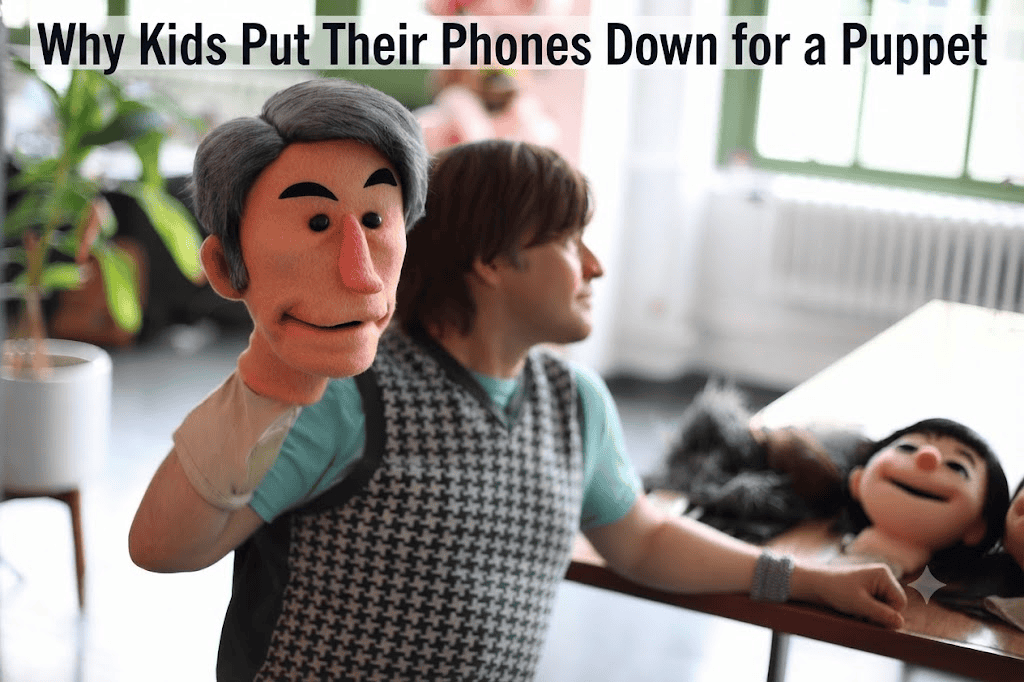
A little while back, New York State needed a mascot who could get millions of students excited about putting their phones away during class. They came to us at Furry Puppet Studio, and we created a character named Frankie Focus. He had to survive actual days interacting with people outside, not just look good in a photo, so we built him tough on purpose. He ended up debuting alongside Governor Hochul, later got worn by Matt Damon on Jimmy Kimmel Live, and even showed up in a New Yorker cartoon. None of that mattered to me as much as the reactions we got from kids. He was an over-the-top mascot, but in a self-aware way, and it seems to resonate with people.
I’m Zack Buchman, founder and Creative Director of Furry Puppet Studio in SoHo, New York. We design and build custom puppets, creatures, mascots, rod puppets, and marionettes for television, advertising, music videos, and live shows.
What keeps me doing this is pretty simple. A puppet exists in the room with you in real time. You can reach out and touch it. Once that suspension of disbelief clicks, it stops being an object and starts being alive to whoever’s watching, and I’ve seen it hit adults just as hard as kids. A screen can’t quite do that, no matter how good the 3D animation is. I think that’s part of why puppets fit so naturally when you want to create a connection and make an impact.
Every puppet we make starts the same way, as a block of foam that gets hand carved into a sculpture. We build the mechanisms inside in house, and 3D print small parts and eyes when it calls for it. The two moments that change a character the most are the earliest sketch, before anyone’s picked up a pair of scissors, and the eyes, right at the very end.


Fabric matters a lot too. Sometimes a character does not start with a sketch at all. A scrap of fur or fabric can already feel like it belongs to somebody, and when that happens it can be pretty inspiring. Some of our best characters were conceived that way: the material told us who they were.
A puppet is also only half of the character. The person performing it is the other half, and I like having a specific performer in mind while I’m still designing. The same face can feel completely different depending on how someone carries it into a room. That part especially reminds me of what a good assembly performer does with a live audience: the material only works once someone brings the right life to it. Example: can you imagine Bert with a different voice?
None of this happens alone, either. Every puppet passes through several sets of hands: someone sculpting the foam, someone building the mechanism inside it, someone sewing the costume around it. I’ve learned to actively look for collaborators whose skills are nothing like mine, and the generosity tends to go both directions once you let it in. That’s probably the one habit I’d want a classroom to take from any of this, since the best character work almost never comes from one person guessing alone in a corner.
Some of the characters we’ve built have gotten pretty recognizable outside the puppet world. We made the only official puppet version of Grumpy Cat. We built the likeness puppets Anderson Cooper and Andy Cohen use every year for CNN’s New Year’s Eve broadcast. We put a blue yeti in a car with Jon Hamm for a music video. None of those started as anything fancier than a sketch and a block of foam, which is honestly the part I like telling people about, especially kids who assume this kind of thing takes some huge factory. I go to my studio, take a piece of paper and start drawing. Just like a child would.
My actual advice for anyone who wants to try this, kid or adult, has less to do with materials than people expect. I keep a small sketchbook and a pencil on me and scribble characters whenever there’s a spare minute, on the train, at lunch, wherever. If a kid already has a phone in their pocket, I’d rather see that spare minute go into a drawing than a feed, and that’s not just an old guy’s opinion: it’s basically the same idea behind Frankie Focus. I’m as susceptible as anybody else to getting glued to a screen. It takes a lot of active effort to set myself free from that.
If a teacher wanted a version of this for a class, I’d keep it just as simple: hand out a pencil and some crayons instead of a worksheet for 15 minutes and have everyone do whatever they want with it. The stakes are low, and it’s pretty ridiculous, but it can be a form of meditation. That’s most of my actual job, just with a block of foam waiting at the end of it instead of a bell.
We’ve been lucky enough to build for Apple, Nike, Nintendo, and Casper, and to work on a Missy Elliott and Pharrell Williams music video with a full cast of marionettes, but none of that changes what actually gets me out of bed most mornings. We build characters that people respond to, we build them by hand in a small studio here in New York, and then they go and have a life of their own that we never could have planned for. It’s magical.
You can see more of our work at Furry Puppet Studio, and if anyone’s curious about the toys we design, check out Uncute Inc.: the Purritos are a personal favorite.